Your Kitchen Is Already A Pharmacy. Nobody Ever Showed You How To Use It.
Ginger, honey, garlic, thyme, turmeric and a few dozen other ingredients you already own were humanity's first medicine cabinet. This 200-page illustrated guide shows you 296 kitchen remedies — each one rated by how strong the evidence behind it actually is — and exactly when to use them, and when not to.
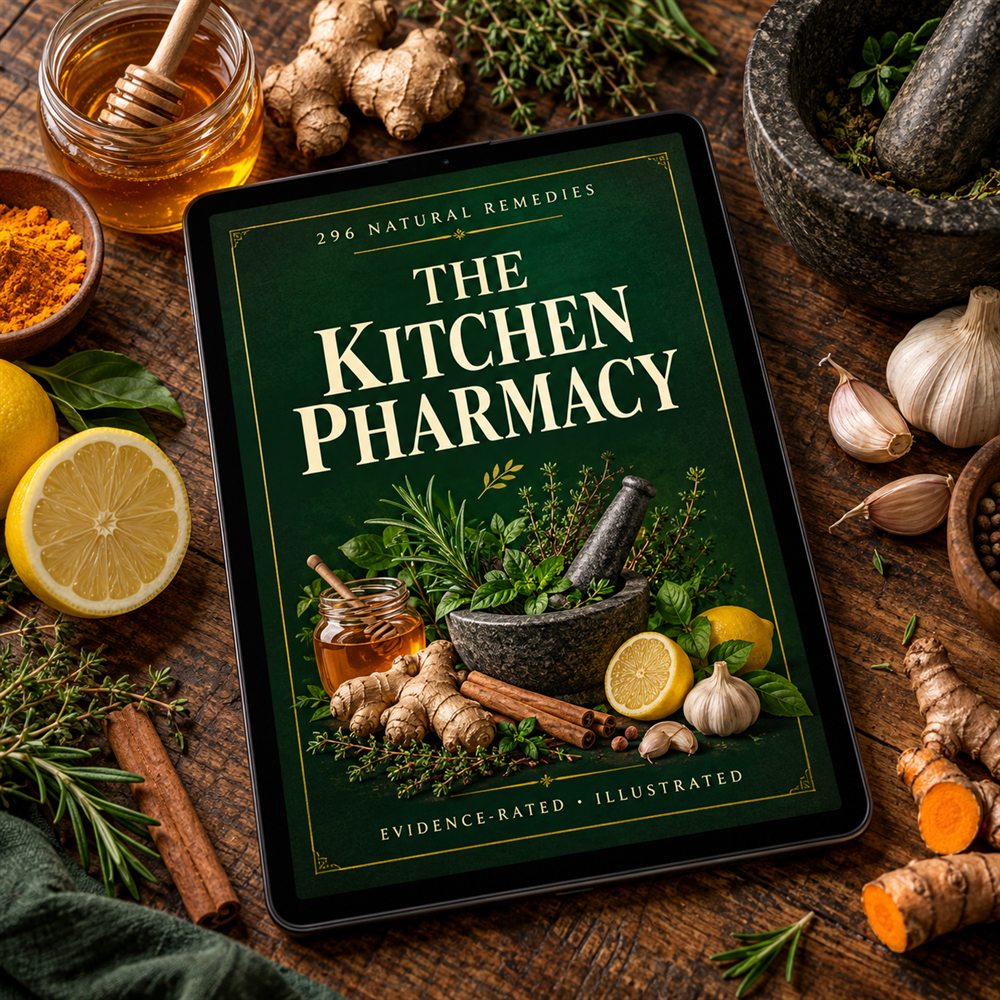
- ★The Kitchen Pharmacy200 pages · 296 evidence-rated remedies
- ✓The Spice Cabinet Cure
- ✓The Herbal Tea Apothecary
- ✓The 21-Day Gut Reset
- ✓The Herb–Drug Interaction Guide
- ✓The Cold & Flu Season Kit
- ✓The Toxin-Free Home
- ✓Sleep Naturally
- ✓Printable Remedy Cards
- ✓Starter Pantry Shopping List
- ✓Remedy Tracker Journal
The knowledge we lost
For Most Of History, The Medicine Cabinet Was The Kitchen
If you've ever stood in front of a pharmacy shelf at 11pm with a sick child, a pounding head or a stomach in knots — reading labels you don't understand, for something that might not even help — I want you to hear this first:
People handled most of this at home for thousands of years. With what was in the cupboard.
Not with magic, and not instead of doctors. With knowledge — passed from one generation to the next. Some of it was later confirmed in a laboratory.
The bark that became aspirin
Willow bark was used for pain and fever since ancient times. In the 1800s chemists isolated its active compound, salicin — and the work that followed led to aspirin, one of the most widely used medicines on earth.
The cough remedy that held up
Honey for a cough is about as old as cooking. Modern reviews of the research have found it can ease children's night-time coughing at least as well as some common over-the-counter options. (Never give honey to babies under one year old.)
The root in the back of the drawer
Ginger for an upset stomach goes back thousands of years in both Chinese and Ayurvedic cooking. Clinical trials have since studied it for nausea, including morning sickness, with encouraging results.
Then, within a couple of generations, most of that knowledge simply stopped being passed down. Families moved, kitchens changed, and the answer to every sniffle became a trip to the shelf.
Here's the part nobody tells you:
Some kitchen remedies have solid research behind them
Some are traditional, promising, but less studied
Some are internet folklore that doesn't hold up
And a few can interact with medications you already take
The problem was never that kitchen medicine doesn't work. It's that nobody tells you which parts do.
Search "natural remedy for…" and you'll get a hundred blogs, each promising miracles, none telling you how strong the evidence is, how much to use, or who shouldn't try it.
That's why so few people will teach you properly. So we did.
The question everyone asks
"Okay. But What Do I Actually Make — And Is It Safe?"
Most people who are interested in natural remedies aren't short on enthusiasm. They're short on two things: a reliable method, and a straight answer about safety.
You've seen the posts. "Turmeric fixes everything." "Apple cider vinegar cures it all." Then you wonder: how much? For how long? Is it safe with my blood-pressure pills? Is it safe for my kids?
You don't need another list of "miracle foods". You need something that tells you what to make, how to make it, how good the evidence is — and when to put the spoon down and call a doctor.
You need a reference you can trust.
Why a list of "healing foods" fails
A List Of Ingredients Won't Help You. A Method Will.
The obvious answer is a list: ginger for nausea, garlic for colds, chamomile for sleep. Pin it to the fridge, done.
It doesn't work. Because a list leaves out everything that matters.
A list tells you
- Ginger is good for nausea
The Kitchen Pharmacy tells you
- Whether to make it as a tea, a syrup or a chew — and exactly how
- How much, how often and for how long
- How strong the research behind it really is
- Who should avoid it, and which medications it can interact with
That's not trivia. That's a method — and every remedy in the book follows it.
Each of the 296 remedies carries an evidence rating, so you always know whether you're looking at something backed by clinical research, something promising but less studied, or something that's mainly traditional use. No hype, and no pretending folklore is science.
So we wrote the book. Not another wellness manifesto. A practical, illustrated reference. The one your family would have handed down, if the chain hadn't broken — with the safety notes it never had.
It runs 200 pages, covers 12 body systems, and assumes you've never made anything more medicinal than a cup of tea.
Introducing
The Kitchen Pharmacy
296 evidence-rated natural remedies made from everyday kitchen ingredients — organised by body system, with the safety checks built in.
The Foundations
Why kitchen medicine works, and why so much of it got pushed aside. The Core 30 ingredients that unlock almost every remedy. 12 preparation methods — teas, syrups, oxymels, tinctures, compresses, salves and more. And a full safety chapter, including which kitchen ingredients interact with common medications.
296 Remedies, By Body System
- Digestion & Gut40 remedies
- Immunity, Colds & Flu34 remedies
- Pain & Inflammation31 remedies
- Skin31 remedies
- Sleep & Stress25 remedies
- Women's Health24 remedies
- Heart, Circulation & Blood Sugar24 remedies
- Hair, Scalp & Nails17 remedies
- Mouth, Teeth & Throat17 remedies
- Energy, Focus & Brain16 remedies
- Allergies & Breathing14 remedies
- Liver, Kidney & "Detox"the truth about detox products
Plus the honest chapter on "detox": what those products really do, and what your liver and kidneys actually need.
Living The Kitchen Pharmacy
Seasonal protocols for every time of year. Remedies for the whole family, with an age-by-age safety guide. 20 foundational healing recipes — including bone broth, fire cider, elderberry syrup and kitchari. And a 7-day starter plan, so you actually begin.
Find Anything In Seconds
An A–Z Symptom Index for the "what do I make for this?" moments, an Ingredient Index for the "what can I do with this?" moments, plus research references and a plain-English glossary.
No miracle claims. No 40 pages of philosophy. Every remedy rated, measured and safety-checked.
10 free bonuses
And Because A Remedy Book Is Only Useful If You Use It, You Also Get…
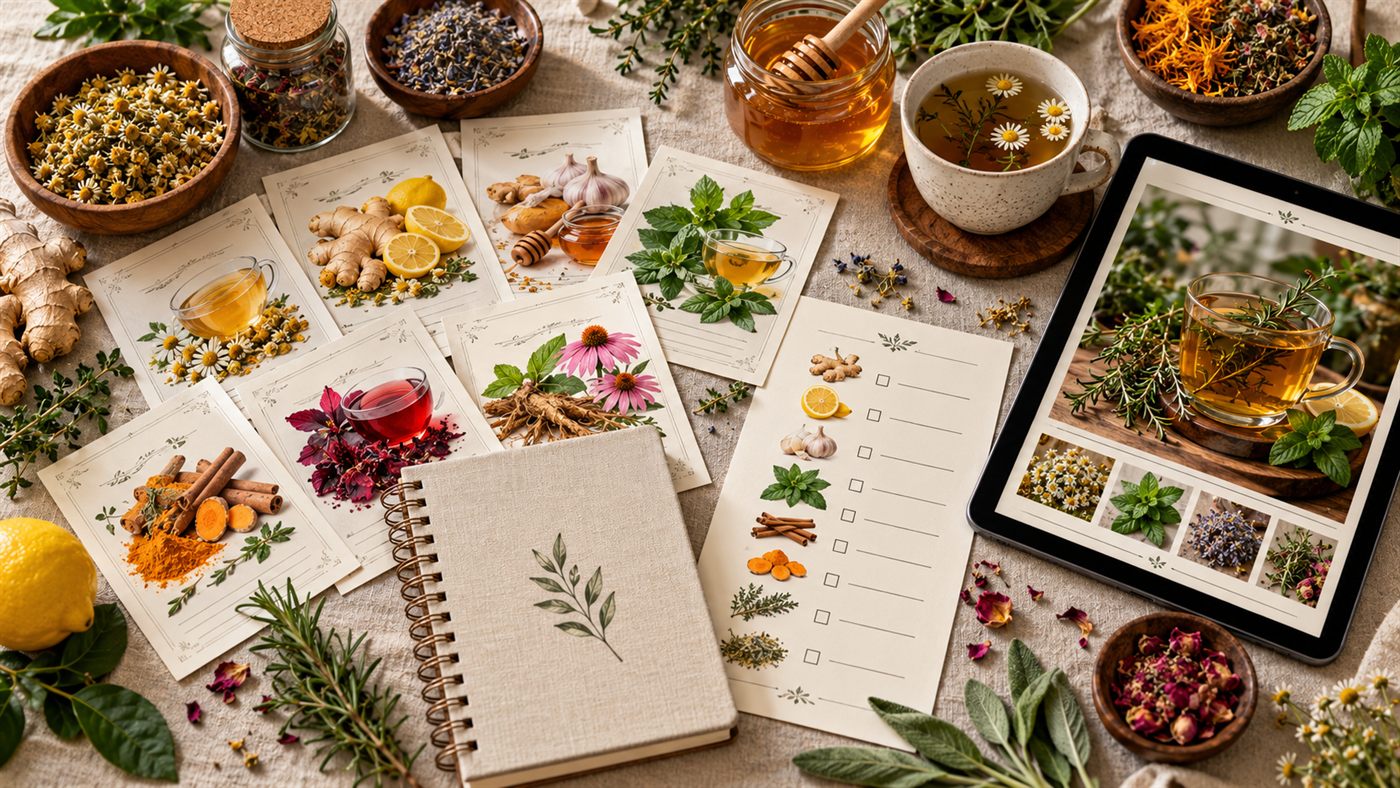
Each bonus below takes one part of the book and turns it into something you'll actually reach for — on the counter, in the cupboard, or on a sick day.
The Spice Cabinet Cure
Twelve healing spices, each with its history, what the research says, recipes and safety notes. The jars you already own, finally explained.
The Herbal Tea Apothecary
50 tea blends for sleep, calm, digestion, immunity, energy and more. Exact ratios, steeping times, and who should skip which herb.
The 21-Day Gut Reset
A gentle, food-first plan in three stages: calm, rebuild, thrive. No extreme cleanses, no powders — just what to eat, day by day.
The Herb–Drug Interaction Guide
Use natural remedies safely alongside your medications. Which common herbs and spices interact with what, and what to ask your pharmacist.
The Cold & Flu Season Kit
A step-by-step sick-day plan, from the first sniffle to full recovery — plus the warning signs that mean it's time to see a doctor.
The Toxin-Free Home
43 DIY cleaners and natural skincare recipes, made from the same simple ingredients as your remedies.
Sleep Naturally
A 14-night plan for deeper, more restful sleep — evening drinks, routines and small changes, one night at a time.
Printable Remedy Cards
40 essential remedies to print, cut and keep in your kitchen. Nobody opens a 200-page PDF while their child is coughing at 2am.
Starter Pantry Shopping List
Build your kitchen pharmacy step by step, on any budget — what to buy first, what can wait, and what's not worth the money.
Remedy Tracker Journal
Track what you tried, how much, and how you felt — and discover which remedies work best for your body.
The Evidence Rating System
Built into every guide, so you always know what the science says — and what it doesn't. It's the difference between a remedy book and a list of rumours.
Let's add it up
Here's Everything You're Getting
| The Kitchen Pharmacy — 200 pages, 296 remedies | $100 |
| Bonus 1 — The Spice Cabinet Cure | $27 |
| Bonus 2 — The Herbal Tea Apothecary | $29 |
| Bonus 3 — The 21-Day Gut Reset | $27 |
| Bonus 4 — The Herb–Drug Interaction Guide | $19 |
| Bonus 5 — The Cold & Flu Season Kit | $19 |
| Bonus 6 — The Toxin-Free Home | $19 |
| Bonus 7 — Sleep Naturally | $17 |
| Bonus 8 — Printable Remedy Cards | $17 |
| Bonus 9 — Starter Pantry Shopping List | $15 |
| Bonus 10 — Remedy Tracker Journal | $12 |
| Total value | $301 |
Instant download. Pay once. No subscription, no trial that bills you later, nothing ships.
Why so cheap?
Straight answer: because a remedy book only helps if it's in people's kitchens. We'd rather thousands of families have this on hand for the next sore throat than a few hundred who paid full price.
Questions
Before You Decide
"Is this a replacement for my doctor or my medication?"
No, and it never pretends to be. The Kitchen Pharmacy is for everyday, minor complaints and general wellbeing. It tells you clearly when something needs a professional, and it includes a full safety chapter and an Herb–Drug Interaction Guide. Never stop or change a prescribed medication without talking to your doctor.
"How do I know these remedies actually work?"
That's exactly what the Evidence Rating System is for. Every remedy is rated by the strength of the research behind it, so you can tell what's backed by clinical studies, what's promising but less studied, and what's mainly traditional use. Research references are included at the back.
"I take medication. Is this safe for me?"
Some kitchen ingredients can interact with common medications — which is why the book has a full safety chapter and why the Herb–Drug Interaction Guide is included free. Use it, and check with your doctor or pharmacist before trying anything new.
"Can I use these for my kids?"
Part Three includes remedies for the whole family with an age-by-age safety guide, because children aren't small adults. Some ingredients — honey, for example — aren't safe for babies under one at all.
"Do I need special ingredients or equipment?"
No. The book is built around the Core 30 — ingredients most kitchens already have, or can get at any supermarket. The Starter Pantry Shopping List shows you what to buy first on any budget. A pan, a jar and a strainer will get you a long way.
"What format is it, and do I get it straight away?"
PDF, readable on a phone, tablet or laptop, or printed. It lands in your inbox within minutes of ordering. Nothing ships, and there's no app to download.
"Is there a subscription?"
No. One payment of $29.99, and you own it.
Your move
The Next Sore Throat Is Coming. What Will You Reach For?
Without the book
Closes the tab. The next time someone at home wakes up with a cough or an upset stomach, it's the same late-night search, the same hundred contradictory blogs, the same guesswork.
With the book
Spends $29.99, opens the Symptom Index, and five minutes later has a remedy on the stove — knowing how much to use, how good the evidence is, and when to call the doctor instead.
The difference isn't how much you care about natural health. You've read this far. The difference is that one of them has a trustworthy reference in the kitchen, and the other is still guessing.
- The Kitchen Pharmacy — 200 pages, 296 remedies$100
- The Spice Cabinet Cure$27
- The Herbal Tea Apothecary$29
- The 21-Day Gut Reset$27
- The Herb–Drug Interaction Guide$19
- The Cold & Flu Season Kit$19
- The Toxin-Free Home$19
- Sleep Naturally$17
- Printable Remedy Cards$17
- Starter Pantry Shopping List$15
- Remedy Tracker Journal$12
Instant download · Pay once · Nothing ships · No subscription
Digital product — all sales are final.
Your great-grandmother didn't need this book. She was taught.
You weren't. That's not your fault — but you can start fixing it tonight.
P.S. If you skipped to the bottom: this is a 200-page illustrated guide to 296 natural remedies made from everyday kitchen ingredients, each rated by the strength of its evidence, with a full safety chapter and 10 bonuses including the Herb–Drug Interaction Guide. $301 of material, yours today for $29.99, delivered to your inbox in minutes.
The information in The Kitchen Pharmacy is for educational purposes only. It is not medical advice and is not intended to diagnose, treat, cure or prevent any disease. Natural remedies can interact with medications and may not be suitable during pregnancy, while breastfeeding, for children, or for people with medical conditions. Always talk to a qualified healthcare professional before trying a new remedy, and seek medical care for serious or persistent symptoms.
© 2026 The Healthy Today. All rights reserved.